My Kit - OM System
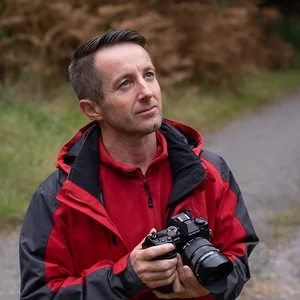
I shoot with OM System (formerly Olympus) cameras and lenses. I chose OM System for two main reasons, the first being cost. Initially, I was looking to go full-frame with Nikon or Sony. Their camera body prices were relatively comparable to (then) Olympus, but it was the cost of the pro spec lenses that put me off. For example, if I wanted a 600mm lens, a Sony version would cost £12,000, which I could never afford, and the Nikon 600mm lens is over £15,000! But the Olympus equivalent was £2,400, which whilst still a lot of money, was much more realistic. Also, the Olympus 300mm lens is not a huge thing that looks like a telescope and weighs a ton, it’s a small lens that weighs under 1.2kg. It becomes a 600mm lens when it is on an OM System camera as they use smaller cropped sensors (micro four thirds), which doubles the focal length of the lens. And that was the second reason for going with OM System, the extra reach that you get from lenses due to the sensor.
However, at the time of doing my research I was finding plenty of stories on the internet about not being able to shoot at high ISO with the Olympus cameras because of the amount of noise that they produced at higher ISO’s, which I will admit, was a bit concerning. But at the same time I was also seeing plenty of professional wildlife photographers using Olympus kit, so surely it wasn’t that bad?
The Overriding Factor - Cost

Again I thought of the money I would be spending. I knew my first lenses would be a wide angle zoom and a macro. The Olympus 60mm f2.8 macro was half the price of equivalent Nikon or Sony and the Olympus 12-24mm f2.8 was £1000 cheaper than the equivalent Sony lens. For me, it was a no brainier. I had to go with Olympus/OM System, and to this day, I haven’t looked back.
Things then got even better with the release of the OM-1. I took the plunge and pre-ordered it as soon as I could. Would my £2000 be wisely spent? Would the camera be much better than my EM1X? Would it be able to handle noise better than my EM1X? I need not have worried. The camera is brilliant. It produces gorgeous files, the animal tracking is brilliant, and the ISO performance is a massive improvement. All things I will talk about in future posts.
Lenses

My favourite lens to use with the OM-1 is the 300mm f4. It’s amazing to be able to walk round all day with what is essentially a 600mm lens and not get tired of carrying it. The image stabilisation of the lens coupled with that of the camera means that it’s easy to get sharp, hand held images at slow shutter speeds. It produces beautifully sharp images - I don’t sharpen any of images in post and it takes a 1.4 converter without any noticeable loss in quality. With the converter on you then have a full-frame equivalent focal length of 840mm that can easily be hand held. The only negative thing I can say about the lens is that it’s not a zoom. Of course, there is the amazing 150-400mm now, but it’s a bit out of my price range. So for now, I will make do with having to live with the slight inconvenience of having to move myself closer to, or further away from my subject.

I also have the 40-150mm f2.8, which is another stunning lens. I do also have the 100-400, which is 200-800mm in full-frame equivalent. This is a great lens, but I do find that I really only get the best out of it when there is plenty of light. Which leads me to one of its great features - it is a brilliant lens for insect macro photography in the summer. It has a minimum focus distance of only 1.3m, which means it’s perfect for getting frame-filling shots of butterflies, dragonflies, flowers, and all of the other beautiful macro subjects that summer brings.
Image Stabilisation
Another important feature that I hadn’t even considered back when I was looking at the system for the first time is just how good the image stabilisation is. I never take a tripod with me, and the only time I do use one, is when I am in a hide. I have handheld shots at (what I consider) slowish shutter speeds and achieved lovely sharp images with plenty if detail. The robin below is a great example of this and it was taken on the EM1X with the 100-400 on a dull day. I have read various articles that say your shutter speed should equal to or double your focal length to avoid camera shake when hand-holding. This is simply not the case with OM System.
Where the image stabilisation really comes into its own is when doing hand-held macro image stacks. It’s ridiculously easy to hand-hold a 15 image stack only a couple if inches from your subject. Check out the wasp spider below. She’s pin sharp front to back and that’s the camera taking 15 separate images at different focal positions whilst I was hand-holding. It’s bonkers! If I would have wanted the spider sharp front to back with one image, I would have had to have stopped the lens down to f11 or more, and then the background would have become distracting and the picture wouldn't have been what I wanted.

Handheld at 160 sec, at 400mm (800mm full frame equivalent)
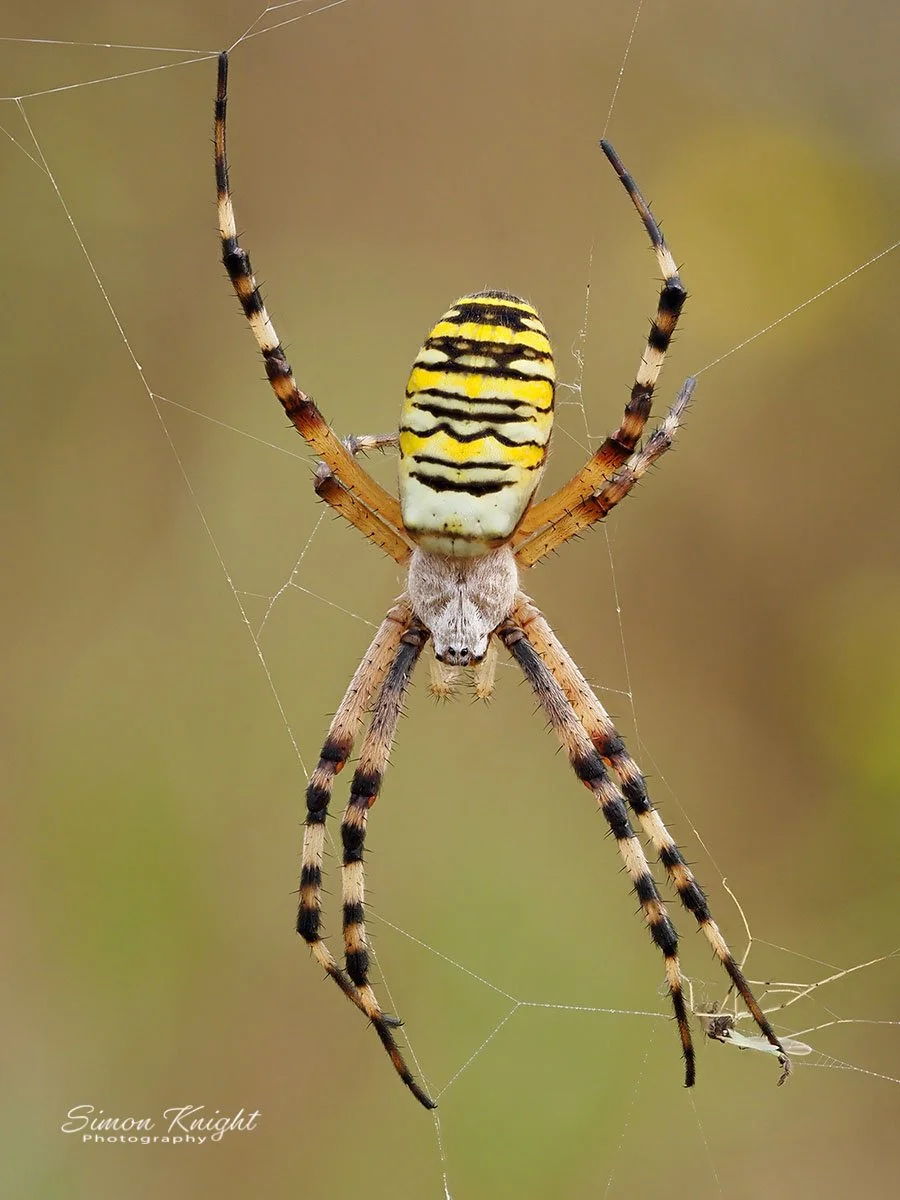
15 stacked images, no tripod, f3.5 - stacked in Photoshop
No Regrets
So I am obviously happy with my decision to go with what was then Olympus and is now OM System. In summary, this is why I love my OM-1:
Autofocus and animal tracking that really does work and frees you up to focus on composition
Fantastic noise handling at higher ISO
Compact - easy to carry all day, regardless of the lens being used
Brilliant weather sealing - rain doesn’t stop play
Stunning image quality
Awesome in-camera focus stacking
Amazing image stabilisation
Despite my obvious bias towards OM System, the bottom line is that nowadays, all cameras are good. So enjoy the camera that you have and remember the saying from photographer Chase Jarvis - “the best camera is the one that’s with you”.